 HLH SKATE
See exactly what is holding your skater back, then get a weekly plan of on-ice drills and off-ice workouts to fix it. Your first analysis is free and takes about 2 minutes.
Every stride measured live — knee bend, lean, ankle snap and symmetry, graded so you know exactly what to fix.
Your player works harder than anyone at practice. They want it. They put in the time. But somehow other kids are just faster and nobody can tell you why.
The coach says work on your skating. Private lessons give you feedback you forget by the next practice. You invest in development and you are still guessing.
The difference between a good skater and an elite one is not effort. It is mechanics. Things that happen in a fraction of a second that no human eye can catch.
A first look from an HLH family — and the skaters Henrik has coached along the way.
No expensive camps, no waiting lists. Upload from anywhere and get results in minutes.
Every score, every breakdown, and a weekly plan built from their own numbers. Right on their phone, between sessions.
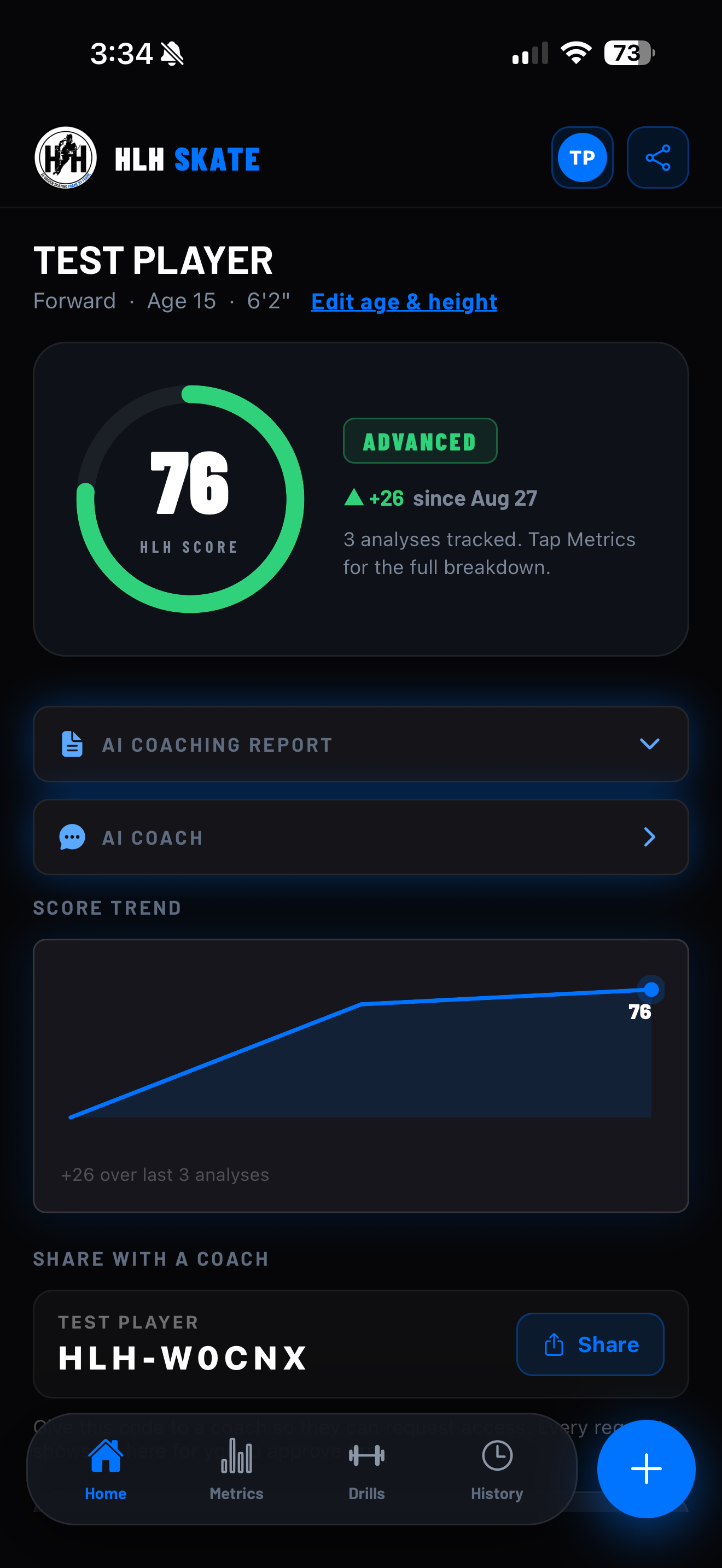
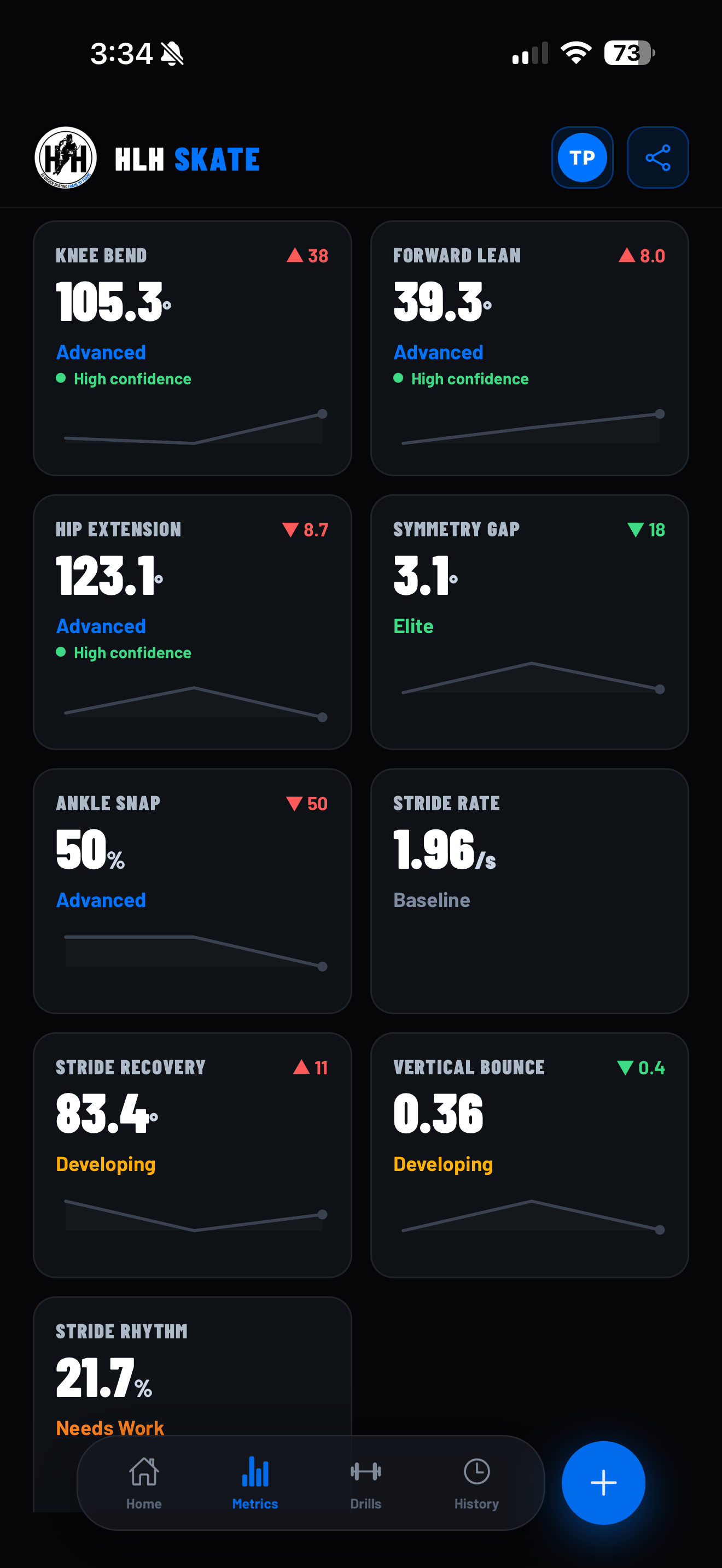
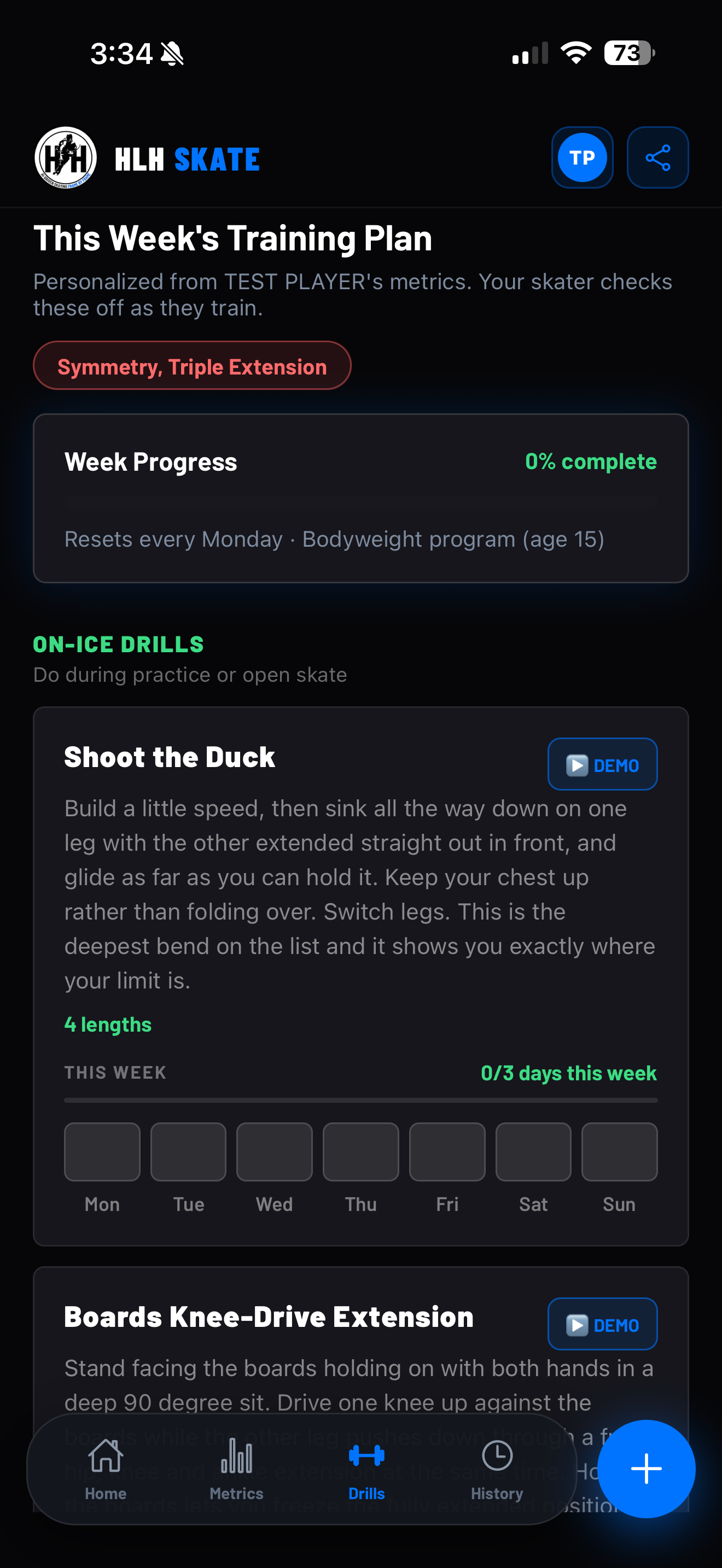
Your player has 2 practices a week. HLH gives them a development system for every other day.
Skating is a movement pattern, and movement patterns are built off the ice as much as on it. Every HLH report includes a personalized off-ice plan tied directly to your player's biomechanical weaknesses. As the metrics improve, the prescriptions progress, from foundational mobility work to advanced unilateral strength, depending on what the data shows your player needs next.
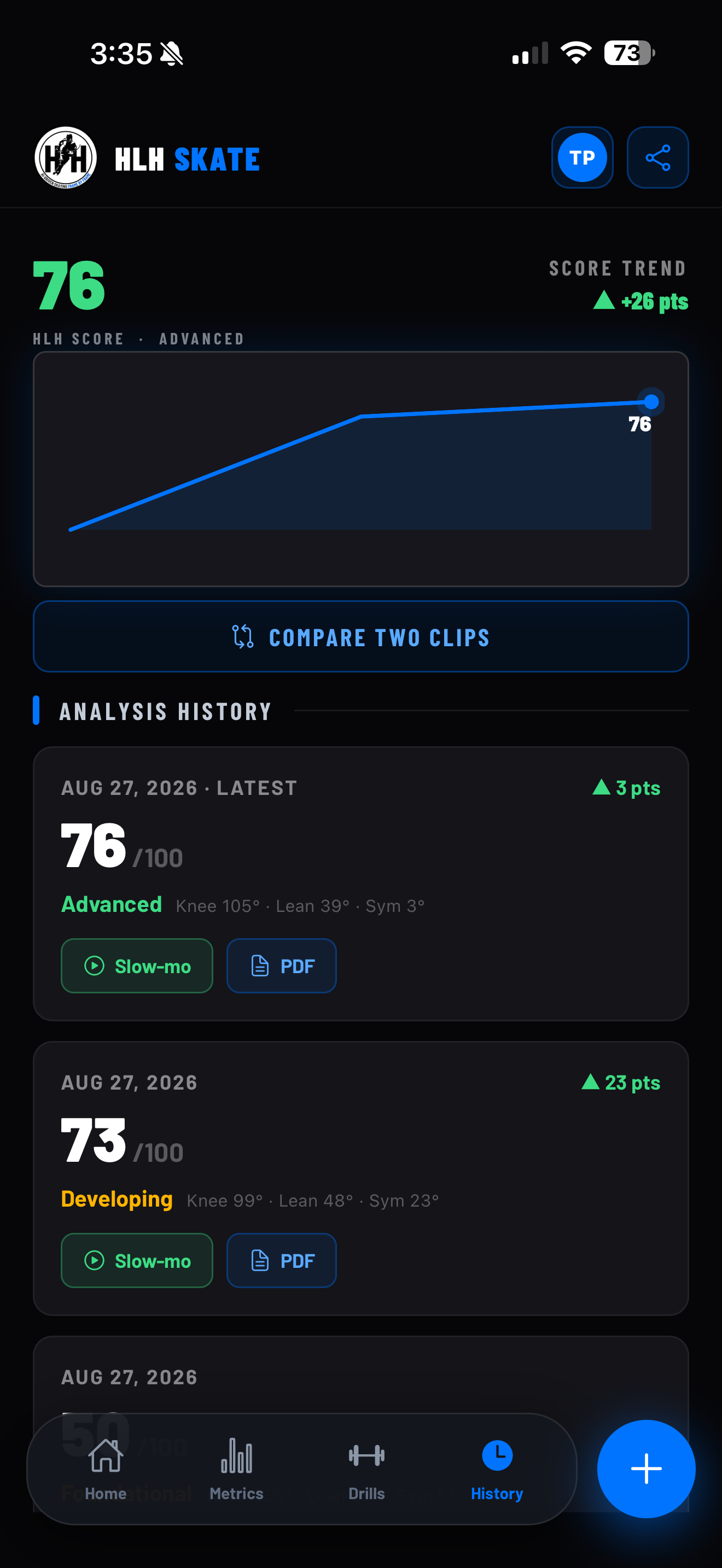
One real HLH skater, a 12U Lower A travel forward, measured six weeks apart. Same metrics, same platform your player would use.
The overall score moved a little. The engine underneath moved a lot: his push power climbed about 65 percent and his hip drive went from needs-work to advanced.
Informed by peer-reviewed hockey biomechanics research from the University of Calgary and McGill University
Most skating apps give you 3-4 basic angles. HLH measures 15, including 9 advanced biomechanical metrics that no other consumer app offers.
These are the actual biomechanical numbers that separate each level of hockey. Informed by peer-reviewed hockey biomechanics research from the University of Calgary and McGill University.
HLH measures every one of these metrics on every upload.
| METRIC |
LEARN TO SKATE
HLH Score 35-50
|
HOUSE LEAGUE
HLH Score 50-65
|
AA / AAA
HLH Score 65-80
|
ELITE / NCAA
HLH Score 80-95
|
NHL
HLH Score 95+
|
|
KNEE BEND
87-95° window
|
135-150° | 120-135° | 105-120° | 90-105° | 87-95° |
|
STRIDE RATE
strides/sec
|
1.1-1.3 | 1.3-1.5 | 1.5-1.7 | 1.7-1.8 | 1.8-2.0 |
|
FORWARD LEAN
degrees
|
10-20° | 20-30° | 30-40° | 40-50° | 45-55° |
|
SYMMETRY GAP
lower = better
|
20°+ | 15-20° | 10-15° | Under 8° | Under 5° |
|
TRIPLE EXTENSION
sync score
|
Under 30% | 30-40% | 40-50% | 50-60% | 60%+ |
|
POWER LEAKS
per session
|
15+ | 8-15 | 4-8 | Under 4 | Under 2 |
Minutes after you upload one video, this lands in your inbox. Not just a number, a coaching read on exactly what is holding your player back and how to fix it.
No tiers, no feature gates. Every family gets the full suite, including all 15 metrics and advanced biomechanics.
Monthly plan is $99/month. Annual plan is $79/month billed as $949 once per year. Toggle below to compare.
"I built HLH because I watched too many players who work harder than anyone still hit a wall. It was never about effort. It was the small mechanics that no one could see. Now every parent gets the same frame by frame breakdown I use on the ice, and the exact drills to fix what it finds."